Why the world’s best surgeons all work together at the Hospital for Endocrine Surgery
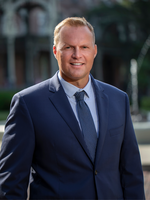
The best surgeons in the world all work together at the Hospital for Endocrine Surgery
The Hospital for Endocrine Surgery is a hospital dedicated only to endocrine surgery, including both open and robotic thyroid and parathyroid surgery for patients with thyroid disease, thyroid cancer as well as parathyroid tumors and primary hyperparathyroidism, respectively. The Hospital is also home to world-renowned adrenal surgeon Dr. Tobias Carling, with patients from all over the globe traveling to have him operate on their adrenal tumors and cancers.
You may be asking yourself, what makes the Hospital for Endocrine Surgery so unique and why should I care?
If you or your loved one is having surgery for an adrenal, thyroid, parathyroid problem, you should care about the quality of the Hospital for Endocrine Surgery and the culture, which makes it unique. It is a hospital dedicated only to endocrine surgery.
Jim Norman of the Norman Parathyroid Center (NPC) deserves some credit here. He had a vision that surgeons caring for patients with parathyroid tumors and primary hyperparathyroidism should work together as a team rather than alone. This created a culture of collaboration.
This may seem like an obvious concept, but to this day, American surgeons largely work in isolation, by themselves, in a silo. We believe this is not good for you.
What makes the culture unique at the Hospital for Endocrine Surgery?
- Highly experienced, specialized surgeons are recruited to the Hospital for Endocrine Surgery.
- The surgeons at the Hospital for Endocrine Surgery work as a team and learn from each other.
- The surgeons at the Hospital for Endocrine Surgery do not work in a silo. They are constantly seeking ways to help each other out.
- The stress-level at the Hospital for Endocrine Surgery is minimal for surgeons, nurses, scrub technologists, and other staff.
- The Hospital for Endocrine Surgery is laser focused on excellence in clinical care, the best possible outcomes for patients and a super pleasant experience.
1) Highly experienced, specialized surgeons are recruited to the Hospital for Endocrine Surgery.
Similar to New York Yankees of old, the 90s Chicago Bulls, or our own Tampa Bay Lightning, the Hospital for Endocrine Surgery recruits surgeons who are highly experienced and dedicated to a single field. If this was the NHL or NFL, we believe our surgeons would be top picks in the first round of the draft.
Are we bragging? Well, check for yourself! If you wish to scrutinize everyone’s credentials, check out the links below.
Adrenal surgery: https://www.adrenal.com/tobias-carling
Parathyroid surgery: https://www.parathyroid.com/surgeons
Thyroid surgery: https://www.thyroidcancer.com/about-our-surgeons
Figure 1. Two highly experienced endocrine surgeons, Dr. Carling, and Dr. Clayman working together removing a neck paraganglioma (similar to a pheochromocytoma) from a patient’s carotid artery. With their combined expertise this operation was performed safely in about 45 minutes.
2) The surgeons at the Hospital for Endocrine Surgery work as a team and learn from each other
Again, Jim Norman of the Norman Parathyroid Center (NPC) deserves credit here. He had a vision that surgeons caring for patients with parathyroid tumors and primary hyperparathyroidism should work together as a team rather than alone. This created a culture of collaboration. This may seem like an obvious concept, but to this day, American surgeons, after training, largely work in isolation, by themselves, in a silo. We believe this is not good for you. This is very important for patients to understand.
After surgeons have finished their residency, they become board-eligible and then if they pass their surgery board exam, board-certified. Just because someone is board-certified does not make them a master surgeon. Not even close. It is like saying that anyone who has played varsity tennis is as good as Roger Federer. Ridiculous! True Mastery of Surgery is very rare (just like people such as Michael Jordan, Wayne Gretzky, Ingemar Stenmark, Tom Brady, and Roger Federer are exceptional). At the Hospital for Endocrine Surgery, every surgeon is dedicated to mastering a single field.
Following residency, surgeons can either open a solo practice, join a group practice or a university practice and start operating. At this point they can select which patients they want to operate on. Also, many do so in isolation, by themselves. Often, attending surgeons may operate with a first assistant, a scrub technologist, or a resident. However, these assistants are not in a position of authority in relation to the attending surgeon. If mistakes happen during the operation, the assistants may not realize it, or may risk losing their livelihood for speaking up. Even in a group or university practice, it is unusual that surgeons scrub in on each other’s cases. Many times, the egos are huge, and many surgeons do not like other surgeons watching them operate. I have never met a master surgeon who does not welcome visitors into their operating room.
Figure 2. Highly experienced parathyroid surgeons, Dr. Mitchell and Dr. Ruan working together inspecting all 4 parathyroid glands in a patient with a parathyroid tumor and primary hyperparathyroidism.
Of course, there is some oversight of surgeons through the hospital credentialing committee as well as state medical license boards. But oversight from a distance is not the same as working alongside colleagues who see your work every day.
Here at the Hospital for Endocrine Surgery, we love having people and our fellow surgeons watch us operate. Why? Because we know that we evolve and learn from each other, and we put aside our egos for the best of the patient. Four eyes can sometimes see more than 2 eyes!
You want your world class surgeons to work collaboratively. You want an open-door policy into the operating room (with careful infection prevention, of course). You do want honesty and transparency from your surgeon. This is why the team culture at the Hospital for Endocrine Surgery matters. This is very good for you as a patient. For adrenal surgery, Dr. Carling personally performs every operation, supported by the same dedicated adrenal surgery team every day.
Figure 3. Parathyroid surgeons Dr. Watkins and Dr. Parrack working together to efficiently and safely remove a parathyroid tumor in primary hyperparathyroidism.
3) The surgeons at the Hospital for Endocrine Surgery do not work in a silo. They are constantly seeking ways to help each other out.
Here at the Hospital for Endocrine Surgery, we love having people and our fellow surgeons watch us operate. Why? Because we evolve and learn from each other, and we put aside our egos for the best of the patient. Four eyes can sometimes see more than 2 eyes! We do not work in a silo and in isolation. We work together, collaboratively.
This sometimes may seem confusing to some patients. They are used to meeting one surgeon, and only one surgeon. Sometimes they get surprised that they get to meet several members of an expert team the same day.
Do not be confused, though. There is always one surgeon in charge of your operation, just as there is only one captain on the ship. For adrenal surgery, that surgeon is Dr. Carling, who personally performs every operation.
We all get along beautifully. We always look for ways to help each other out for the best of the patient, so that patients do not have to wait and can have their operation safely and expeditiously.
Figure 4. Dr. Carling and Dr. Rhodes in the operating room. When a team works together every day, the operation flows like a perfect Vienna orchestra.
4) The stress-level at the Hospital for Endocrine Surgery is minimal for surgeons, nurses, scrub technologists, and other staff.
It is no surprise that a team which works together day in and day out and does the same kind of tasks (in this case, very sophisticated endocrine surgery), works better. If you go to a typical university hospital it is not uncommon that a surgeon has never met the anesthesiologist or the other team members before. This is not good for you. The surgeon may work with different teams and for endocrine surgery, which is relatively rare at most university and community hospitals, it is often “the first time every time”.
The operating room is by its very nature a stressful place. Many issues are at stake and there is an inherent risk in any surgical operation. However, working with the same team day in and day out and having your very best friends as your colleagues make the Hospital for Endocrine Surgery a remarkably low-stress surgical hospital.
Figure 5. The supremely accomplished thyroid surgery team with Drs. Clayman, Roy and Walsh were happy to welcome the first patients at the Hospital for Endocrine Surgery in January 2022.
If you have a difficult operation, you know that close by are other experts in endocrine surgery. This reduces the stress level tremendously for the surgeon, which makes him or her perform at the highest level. When the surgeon’s stress level is low, it also makes for a much more pleasant working environment for everyone involved including anesthesia, nurses, surgical technologist and even the janitors. We are all just one family all working for the best possible outcome for the patients in a very pleasant atmosphere.
Contrast this to the typical university or community hospital where the team members may not know each other, trainees are still learning, and it’s often “the first time every time”. Here at the Hospital for Endocrine Surgery, we work with the same team every day and we literally have done this thousands of times before.
Figure 6. Drs. Carling, Rhodes and Suh celebrate the first scarless robotic thyroidectomy cases performed at the Hospital for Endocrine Surgery.
Learn more about scarless robotic thyroid surgery and Dr. Suh here.
5) The Hospital for Endocrine Surgery is laser focused on excellence in clinical care, the best possible outcomes for patients and a super pleasant experience
Nobody is practicing on you at the Hospital for Endocrine Surgery. There are no students, trainees or residents operating on you. The Hospital for Endocrine Surgery is laser focused on excellence in clinical care, the best possible outcomes for patients and a super pleasant experience. In comparison, a large university hospital has other major missions such as research and education. All these missions are, of course, valuable, but that means that excellence in clinical care is only one of many missions at a university hospital. Trust me, you want to have your endocrine surgery operation at a hospital which is supremely focused on excellence in clinical care and the best possible patient outcomes. Too many missions of an organization risk making none of them reach the level of excellence. It is very difficult to be the best in the world on endocrine surgery if you are not 100% committed to the best care and outcome for the patients.
Figure 7. All surgeons do clean up pretty well too…
Additional Resources:
- Learn more about the Carling Adrenal Center
- Learn more about Dr. Tobias Carling
- Learn more about our sister surgeons at the Norman Parathyroid Center, Clayman Thyroid Center and Scarless Thyroid Surgery Center
- Learn more about the Hospital for Endocrine Surgery