What is an Adrenal Incidentaloma?
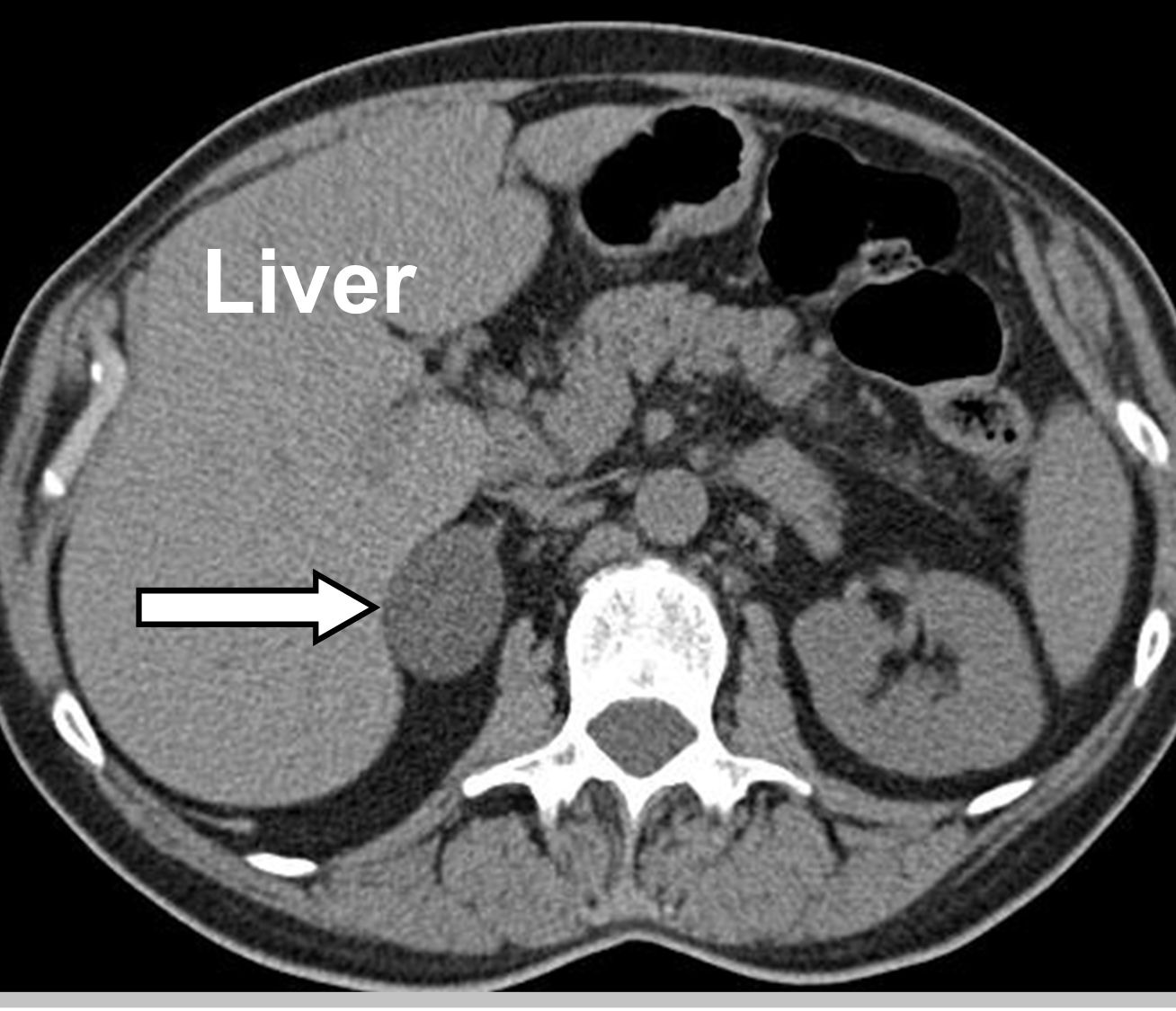 CT scan showing a right adrenal incidentaloma. All incidentally identified adrenal tumors seen on CT scans done in the ER need to be worked up to ensure they do not overproduce hormones or are cancerous.
Is this bad?
Most of the time it is not cancer, but it should never simply be ignored. The large majority of adrenal masses seen on a CT scan are benign growths. However, a substantial share of them make excess adrenal hormone, most often cortisol. Too much cortisol from an adrenal tumor is called adrenal hypercortisolism (AHC), formerly called MACS (mild autonomous cortisol secretion) or subclinical Cushing syndrome, and it is by far the most common hormone excess found in adrenal incidentalomas. The primary thing for you to know is that a few blood and urine tests are necessary for every adrenal mass to determine if yours is one that should be treated, or one that can safely be left alone. The blood and urine tests, together with a careful look at the CT scan, will determine what needs to be done.
The HCA Care Assure Adrenal Tumor Screening Program
HCA Hospitals on the west coast of Florida want to make sure that patients who had an adrenal growth or adrenal tumor noted on a CT scan when visiting an HCA Hospital ER are followed up appropriately. This page will discuss this program and what it means to you, what you need to do, what doctors you need to see, and what tests you can be expected to undergo. The goal is to make sure all adrenal masses and growths are identified and tested appropriately to help you have the best care possible. The program HCA Hospitals created to achieve these goals is called Care Assure.
 HCA Hospitals are screening for adrenal tumors through their Care Assure program.
How does the HCA Care Assure Program for adrenal tumors work?
HCA Hospitals began their Care Assure program to make sure patients get the best treatment possible for issues identified during a visit to one of their hospitals. This program was needed because many times the patient went to the hospital and got a CT scan for some other reason, and the adrenal mass was seen incidentally. In other words, they were not looking for an adrenal mass, but they found one. Worldwide, when something is found that wasn't the reason the patient came to the hospital then the "new" "incidental" problem often doesn't get the attention it deserves once the patient leaves the ER.The Care Assure program was designed to help patients who have an adrenal mass found on a CT scan receive the care they need, improving the efficiency of medical care and improving the overall quality of care and patient satisfaction. After an adrenal mass is found on a CT scan, a nurse navigator will contact you from the HCA hospital and tell you what the correct next steps are. In addition, the nurse navigator will communicate with both your hospital doctors and your regular doctors (including the primary care physician) to help you navigate and schedule appointments, laboratory studies and any other tests you may need.
Why is it important that adrenal masses found on CT scan are investigated?
Even though the overwhelming majority of adrenal tumors are benign, many of them cause significant and often dramatic symptoms because they produce excess adrenal hormones. Adrenal tumors that produce hormones usually need to be removed because the excess hormones can cause toxic effects to your body, make you feel miserable and can shorten life if untreated. Too much of the adrenal hormones aldosterone, cortisol and catecholamines (adrenaline-type hormones) can have very toxic effects on the body long-term.Adrenal tumors that make too much hormone are called “functioning” or “endocrine-active” tumors. Aldosterone-producing adrenocortical tumors cause primary aldosteronism (PA, also called primary hyperaldosteronism or Conn's syndrome), whereas cortisol-producing adrenocortical tumors cause adrenal hypercortisolism (AHC; severe AHC is adrenal Cushing syndrome). Catecholamine-producing (adrenaline-producing) adrenal tumors are called pheochromocytomas. A functioning adrenal tumor should almost always be removed by surgery (adrenalectomy), which is the only cure; the exceptions are mild PA or PA from both adrenal glands, which often responds well to medication, and mild AHC, where the decision is individualized. Cancerous and potentially cancerous masses are also removed with surgery. The vast majority of adrenal tumors are benign, meaning not cancerous, but still may need to be removed if they are making too much of any adrenal hormone. You can read more about all of these adrenal tumors by selecting them in our navigation menu.
Questions to Ask Your Doctor
- What tests do I need?
- Is my adrenal tumor producing excess hormone?
- Should I see an endocrinologist?
- What are my options for treatment?
- If surgery is required, is there an expert in adrenal surgery?
- How often will I need check-ups?
What tests do I need for an adrenal mass or adrenal nodule?
First, in addition to the CT scan you already had, it is important for you to meet with your doctor to assess via a History and Physical Examination (H&P) whether you have any adrenal-specific signs and symptoms of adrenal disease. A great doctor will always perform a very careful H&P to identify signs and symptoms of adrenal tumor disease. One of the hallmarks of adrenal tumors is high blood pressure, also known as hypertension. Most adrenal tumors that are producing hormone will cause high blood pressure. Tumors that overproduce catecholamines (called pheochromocytoma), as well as aldosterone-producing tumors (causing primary aldosteronism) and cortisol-producing tumors (causing adrenal hypercortisolism) can all cause high blood pressure.Many patients with a pheochromocytoma have a variety of symptoms. They can have spells that are extremely variable with differing symptoms each time, but the symptoms typically include heart palpitations, pallor, flushing, tremors, headaches and sweating. They get sweaty, their heart races and they have anxiety. If the adrenal tumor is overproducing cortisol, most patients do not have the classic Cushing appearance; high blood pressure, diabetes or pre-diabetes, weight gain and bone loss may be the only clues. The symptoms of severe cortisol excess (Cushing syndrome) include weight gain and central body obesity (you store fat especially around your abdomen). Your face might develop more round features and you develop fat deposits above your collar bones and on your back (called buffalo hump). Patients may develop problems with bruising easily, thin skin and poor wound healing. Read more about symptoms of adrenal tumors.
Second, there are a number of blood and urine tests that need to be measured, each tailored to identify overproduction of any of the hormones: cortisol, aldosterone and catecholamines (adrenaline-type hormones). Read more about lab testing for adrenal tumors. Every adrenal mass needs the following laboratory tests (in each case the result that points to a hormone-producing tumor is given in parentheses):
A 24-hour urine cortisol and a late-night salivary cortisol are usually normal in mild and moderate AHC, so normal results on those tests do not rule it out.
Third, the CT scan itself needs a careful review. On a CT scan done without contrast, the density of the mass is measured in Hounsfield units: 10 Hounsfield units or less means a lipid-rich, benign adenoma. Many emergency room CT scans are done with contrast, so sometimes an additional CT scan without contrast, or another scan, is needed to better assess the adrenal mass. Read more about scans for adrenal tumors. An adrenal mass should almost never be biopsied.
Should I see a medical endocrinologist for the adrenal mass?
Medical endocrinologists are specialized medical doctors focusing on hormone-related diseases including adrenal tumor disease. The nurse navigator will communicate directly with your primary care physician. If needed, the nurse navigator can also assist in identifying and provide referrals to a medical endocrinologist. The medical endocrinologist can assist in ordering and interpreting the CT scan as well as the adrenal tumor disease-specific blood and urine tests.
What happens if I may need surgery for the adrenal mass?
The majority of adrenal tumors that are found incidentally on CT scan performed at a hospital ER will not need surgery. All will need to have their hormone production measured. If no excess hormone is being made and the CT scan shows a clearly benign, lipid-rich adenoma (10 Hounsfield units or less), the mass can usually be left alone, and your doctor will advise whether any follow-up scan is needed. If the adrenal tumor is producing any of the above hormones, surgery is usually recommended. Surgery is also generally recommended when the tumor is large (about 4 cm or more) and not clearly benign, or when it looks suspicious on the scan.If you need surgery, your doctors (usually the primary care physician and/or medical endocrinologist) will refer you for surgery. Read more about adrenal surgery. As you will read, it is extremely important for you to have a surgeon who performs adrenal surgery regularly. Unfortunately, the typical surgeon who performs adrenal surgery does about one adrenal operation per year.
Last updated October 2026.