What are the Symptoms of Adrenal Tumors and Adrenal Masses?
If you have an adrenal tumor, the symptoms and signs may include:- Hypertension (high blood pressure)
- Weight gain, especially around the abdomen
- Fatigue
- Muscle weakness
- Hypokalemia (low potassium levels)
- Insomnia or sleep disturbances
- Excess fat in the upper back, shoulders and neck (called buffalo hump)
- Round, full face (called "moon face")
- Thin, easily bruising skin
- Stretch marks (often purple-red on the lower abdomen, thighs, and breasts)
- Unexplained weight loss
- Diabetes mellitus or prediabetes (glucose intolerance)
- Osteoporosis (bone loss) or fractures
- Low mood, anxiety or trouble concentrating
- Recurrent headaches
- Pallor (paleness)
- Panic attack symptoms (fear, anxiety)
- Irregular or rapid heart rate
- Dizziness, especially when standing
- Tremors
- Abdominal fullness, discomfort or pain
- In women: Virilization (male characteristics, with facial and body hair, deepening voice, menstrual irregularities etc.)
- In men: Feminization (female characteristics, with breast enlargement and tenderness, lowered sex drive and erectile dysfunction)
Symptoms of Adrenal Tumors are Related to the Adrenal Hormones Being Produced
The adrenal gland makes a number of different hormones that help control blood pressure, salt balance, blood sugar, metabolism and the body's response to stress. Because many adrenal tumors produce hormones, the symptoms depend on which hormone is made in excess. A common adrenal tumor is a benign adrenal adenoma that produces too much aldosterone. Since aldosterone regulates salt, potassium and blood pressure, a person with an aldosterone-secreting adrenal tumor has high blood pressure and sometimes a low blood potassium level, although most patients have a normal potassium. This is called primary aldosteronism (PA), also known as Conn's syndrome (after Dr. Conn, who first described the disease) or primary hyperaldosteronism.Another common adrenal tumor is a benign adrenal adenoma that produces too much cortisol. Too much cortisol is very toxic to the body, and the symptoms are numerous. The disease is called adrenal hypercortisolism (AHC), formerly called MACS (mild autonomous cortisol secretion) or subclinical Cushing syndrome; in its severe form it is adrenal Cushing syndrome, named after Dr. Cushing. Most patients with AHC do not have the classic Cushing appearance (round face, fat pad on the upper back, purple stretch marks). Far more often, high cortisol shows up as high blood pressure, diabetes or prediabetes, weight gain, osteoporosis or fractures, poor sleep and low mood.
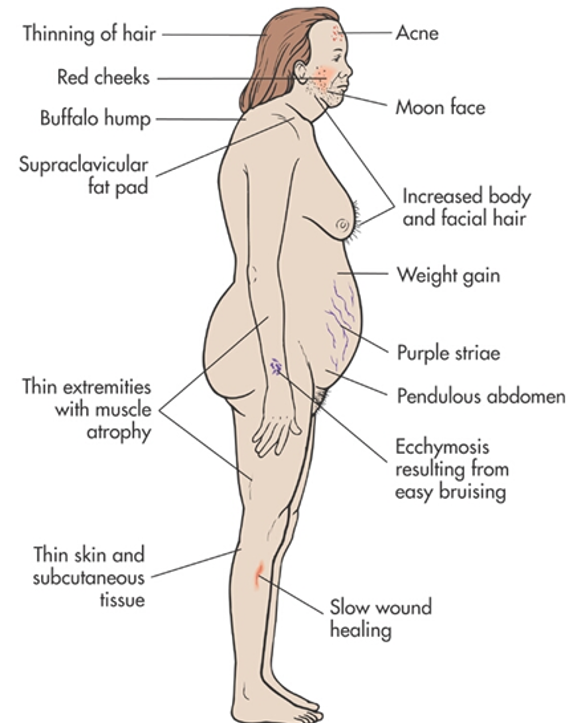 Severe adrenal hypercortisolism (adrenal Cushing syndrome) causes many symptoms throughout the body.
Another example of how the symptoms of adrenal tumors are related to the hormone being overproduced is the pheochromocytoma. Another hormone the adrenal gland makes is adrenaline, which is made in the center of the adrenal, called the adrenal medulla (more about this on our anatomy page). Tumors of the adrenal medulla cause a lot of problems because they produce an excess amount of adrenaline (epinephrine) and noradrenaline (norepinephrine). Most of these tumors never spread, but all are now considered to have some potential to do so, and about 30–40% are hereditary, so genetic testing should be offered to every patient. We call these tumors pheochromocytomas. Patients with a "pheo" (that's what we call it for short) have symptoms related to the excess adrenaline--they get a fight-or-flight response syndrome and have anxious spells and a sense of impending doom. They also typically get high blood pressure that is hard to control because of the excess adrenaline.
Remember, many patients with an adrenal tumor have no symptom other than high blood pressure, and some have none at all. A tumor that causes no symptoms still needs hormone testing. If you have high blood pressure and any of the other symptoms listed here, ask your doctor to test your adrenal hormones. Read more about high blood pressure caused by adrenal tumors.

Last updated October 2026.