Why Do We Prefer Adrenalectomy Through the Back (MBSA) for Adrenal Tumors?
Adrenal surgery can be performed eight different ways, and we believe the best operation for most patients is the Mini Back Scope Adrenalectomy (MBSA), also called "posterior retroperitoneoscopic adrenalectomy". The most commonly performed adrenal operation, in the United States and worldwide, is laparoscopic adrenalectomy through the abdomen. Published comparisons of the two favor the back approach for operating time, pain after surgery and length of hospital stay, with similar complication rates. Still, the technique used should depend on the situation at hand, and your adrenal surgeon should be comfortable with all the different techniques, because adrenal surgery should be tailor-made for you and your specific tumor.
What are the Benefits of Mini Back Scope Adrenalectomy (MBSA)?
The Mini Back Scope Adrenalectomy (MBSA) is the technique we use for more than 95% of our adrenal operations, for a number of reasons:
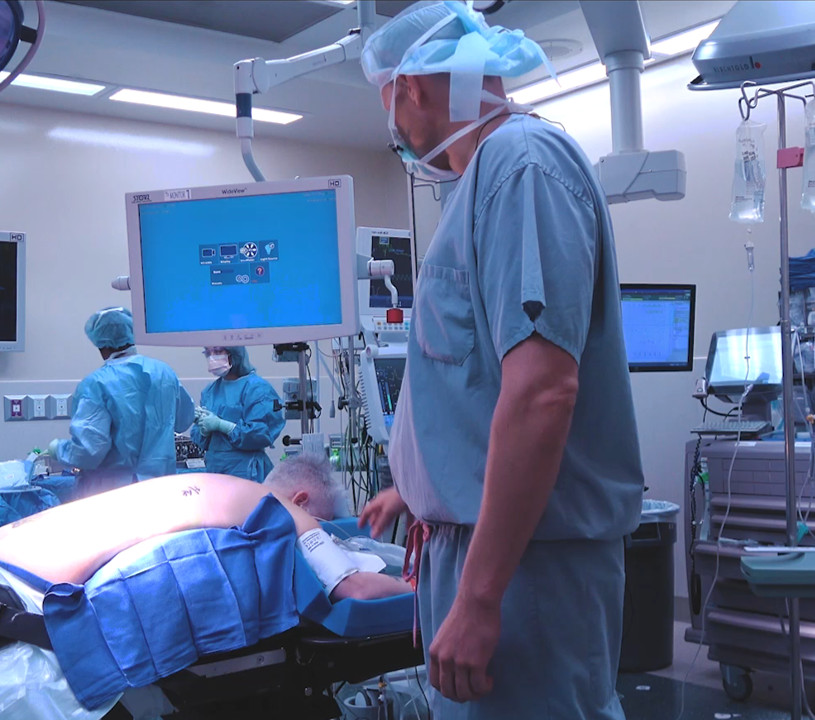 Dr. Carling inspecting that the positioning of the patient is perfect prior to proceeding with Mini Back Scope Adrenalectomy (MBSA).
- The Mini Back Scope Adrenalectomy (MBSA) is designed to be safe. There is less mobilization (i.e. dissection of surrounding structures), because the surgeon goes directly to the adrenal gland without entering the abdominal cavity. We believe this lowers the risk of injury to surrounding structures such as the kidney, liver, spleen, pancreas, bowel or major vessels such as the inferior vena cava (IVC). Published comparisons with laparoscopic surgery through the abdomen show similar overall complication rates; the surgeon's experience matters most.
- The Mini Back Scope Adrenalectomy (MBSA) is faster. There is no value in a fast operation, per se; the operation needs to take as long as is required to get the job done. However, a fast operation usually reflects a surgeon who is skilled and experienced with it. Published comparisons favor the back approach for operating time, and in Dr. Carling's hands the MBSA typically takes 20 to 30 minutes. A shorter operation means less time under general anesthesia, which is generally better, especially for older patients.
- The surgeon does not need to enter the abdominal cavity when performing the Mini Back Scope Adrenalectomy (MBSA). This means that even for patients with previous operations on the abdomen, the surgeon does not need to deal with adhesions (scar tissue). Intra-abdominal adhesions may be from previous operations such as bariatric surgery (gastric band, sleeve gastrectomy, gastric bypass), gallbladder surgery (cholecystectomy), liver surgery, stomach surgery, bowel surgery of any kind (colectomy, appendectomy, etc.) or gynecological operations (C-section, hysterectomy, etc.). It also means the operation does not create new intra-abdominal adhesions, which can occasionally lead to small bowel obstruction, and the risk of an incisional hernia in the abdominal wall is lower.
- There is less postoperative pain following the Mini Back Scope Adrenalectomy (MBSA). Many patients only take Tylenol (acetaminophen) after the operation. Very few patients need strong painkillers.
- Patients typically go home sooner. The typical patient spends less than 23 hours in the hospital after an MBSA, whereas patients having an operation through the front of the abdomen often stay one to two nights.
- The recovery is faster following the Mini Back Scope Adrenalectomy (MBSA). Most people with desk jobs return to work within a few days to a week. You can resume your hobbies and exercise sooner, whether you enjoy walking, running, biking, yoga, weight lifting, skiing, tennis, golf or any other workout.
- The cosmetic outcome is excellent: three small incisions on the back.
- There is very little blood loss during the Mini Back Scope Adrenalectomy (MBSA). Watch Dr. Carling’s surgical videos and you can see for yourself. Blood loss is typically less than when you have your annual blood tests by your primary doctor, where they draw a few tubes of blood, and a blood transfusion is very rarely needed.
- For patients requiring surgery on both adrenal glands, there is no moving, flipping and turning the patient around during the Mini Back Scope Adrenalectomy (MBSA). This is better for the patient and the entire operating room staff.
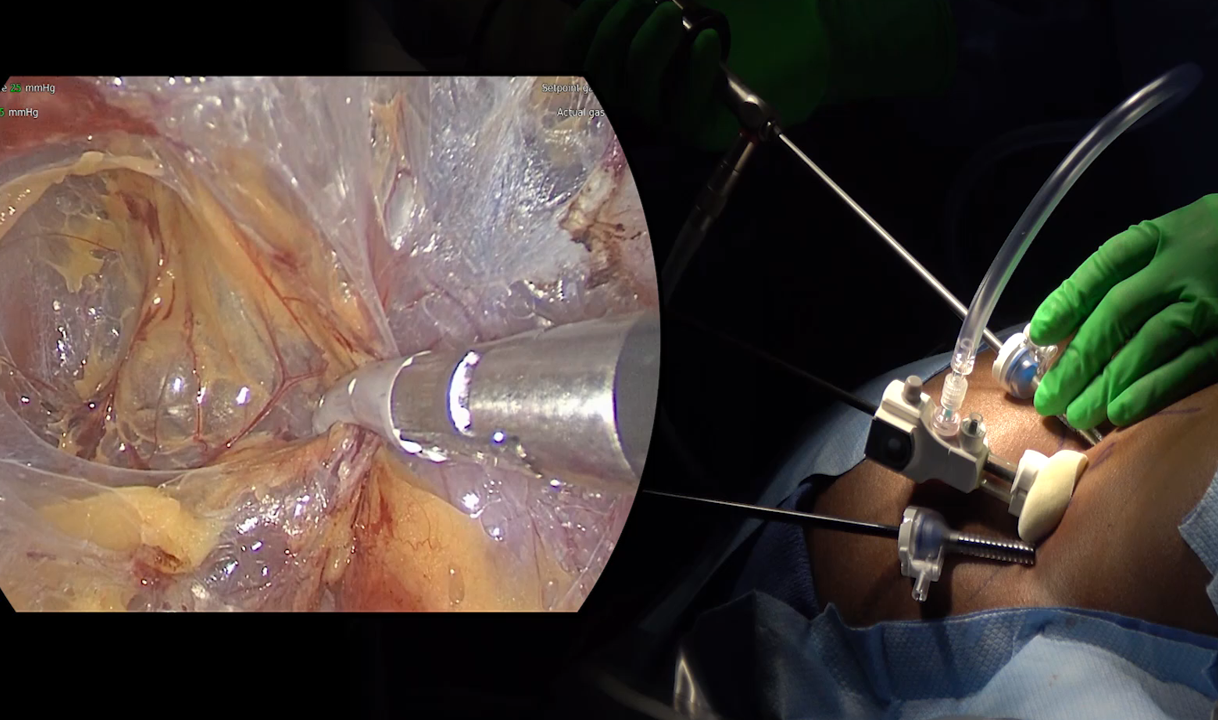 The Mini Back Scope Adrenalectomy (MBSA) is performed with a small high-definition camera and fine endoscopic instruments.
The limits of the back approach. No operation suits everyone. The patient lies face down (prone) during the MBSA, which does not suit every patient. Body build matters: the distance from the skin to the adrenal gland is more important than body mass index (BMI). The MBSA suits most tumors, but very large tumors or known adrenal cancers may need a different approach, such as open adrenalectomy.
What are some of the things you should know about adrenal gland surgery? Read more on our adrenal surgery blog
Last updated October 2026.