What is Adrenal Vein Sampling (AVS)?
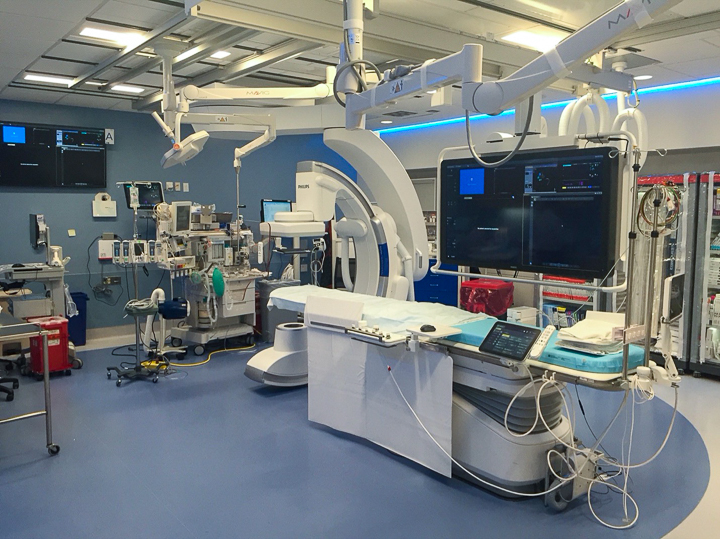 Adrenal vein sampling is performed by an interventional radiologist in an interventional radiology (IR) suite. These types of doctors are radiologists with special training in using X-rays and performing procedures with tiny catheters.
Adrenal vein sampling is an X-ray study to figure out:
a) Does the excess aldosterone come from one adrenal gland or from both? b) If from one, is it the left or the right?
Adrenal vein sampling is an interventional radiology study performed by radiologists trained specifically in invasive procedures using catheters. It is the standard test for telling one-sided (unilateral) from two-sided (bilateral) primary aldosteronism. A thin catheter is passed through a vein in the groin, and blood samples are obtained from each adrenal vein and from the inferior vena cava. Aldosterone and cortisol are measured in every sample to show which gland is over-producing aldosterone. In experienced centers, both adrenal veins are catheterized and sampled with a technical success rate exceeding 90%. The technical success rate of adrenal vein sampling is directly related to operator experience. If you need it, this is a test you want to travel for.
Remember, not all patients need adrenal vein sampling. AVS is invasive, technically difficult and done well in few centers, so we believe it should be used selectively, when the result would change the plan. Note from the Carling Adrenal Center: If you have primary aldosteronism, let us review your scan (CT or MRI). We review adrenal scans every day, and Dr. Carling has published research on which patients need adrenal vein sampling and which do not. Let us review all your information and help you decide whether you need adrenal vein sampling or not.
Again, the technical success of adrenal vein sampling is directly associated with operator experience. You want an expert interventional radiologist to perform your adrenal vein sampling. The Carling Adrenal Center in Tampa works with a highly experienced interventional radiology team for adrenal vein sampling. A lateralizing ("positive") adrenal vein sampling enables curative adrenal surgery for primary aldosteronism (Conn’s syndrome).
Experience matters: choose an experienced interventional radiologist for your adrenal vein sampling
Similar to adrenal surgery, performing adrenal vein sampling is both an art and a science. There is a very strong correlation between the expertise and experience of the interventional radiologist and the results of adrenal vein sampling. The most expert centers have a technical success rate exceeding 90%. An expert interventional radiologist has a much higher success rate and a lower complication rate, and can perform the procedure much faster than somebody who does it only occasionally. Very few interventional radiologists perform adrenal vein sampling in high volume. If you need the test, it is worth traveling to an expert center. We regularly see patients whose adrenal vein sampling was not performed correctly, so that the results are meaningless. Even worse, we sometimes see patients who have suffered major complications with bleeding, hematomas, and rupture of the adrenal veins, which can make later surgery more difficult. Many hospitals perform too few of these procedures to be consistently successful; ask how many they do each year and what their success rate is.
In our view, the best adrenal operation for primary aldosteronism is the Mini Back Scope Adrenalectomy (MBSA). Read more about the Mini Back Scope Adrenalectomy (MBSA) and about surgery for primary aldosteronism.
Do I need adrenal vein sampling? Some, but not all, patients with primary aldosteronism (Conn’s syndrome) do
Not all patients with primary aldosteronism need adrenal vein sampling. Our approach, which Dr. Carling and colleagues published in JAMA Surgery in 2026, is based on how severe the PA is and what a high-quality CT scan shows:
- Severe PA with a clear tumor on one side. Patients with severe PA, an unequivocal tumor in one adrenal gland on a high-quality CT scan and a completely normal gland on the other side can often skip AVS and go straight to curative adrenalectomy.
- Mild PA. Mild PA often involves both glands and responds well to medication (mineralocorticoid receptor antagonists such as spironolactone or eplerenone). These patients usually need neither AVS nor surgery.
- Moderate or severe PA with a negative or ambiguous CT scan. This is where AVS has its greatest value: without it, these patients could be denied an operation that might cure them.
- Tumors in both adrenal glands. AVS can help when only a one-sided total adrenalectomy is planned.
The decision is individualized. It also depends on where you live (your access to expert AVS) and on your own preference. Many guidelines recommend AVS for most patients before surgery; in our practice we omit it in selected patients, and we will discuss the trade-off with you, which is a small risk of operating on the less active gland. What do I do if I am unsure whether I need adrenal vein sampling? After you have had a CT scan of your adrenal glands, contact the Carling Adrenal Center. We will be happy to evaluate your case and your CT scan and advise whether or not you need adrenal vein sampling.
How do I prepare for AVS? An adrenal-protocol CT scan beforehand improves the success rate
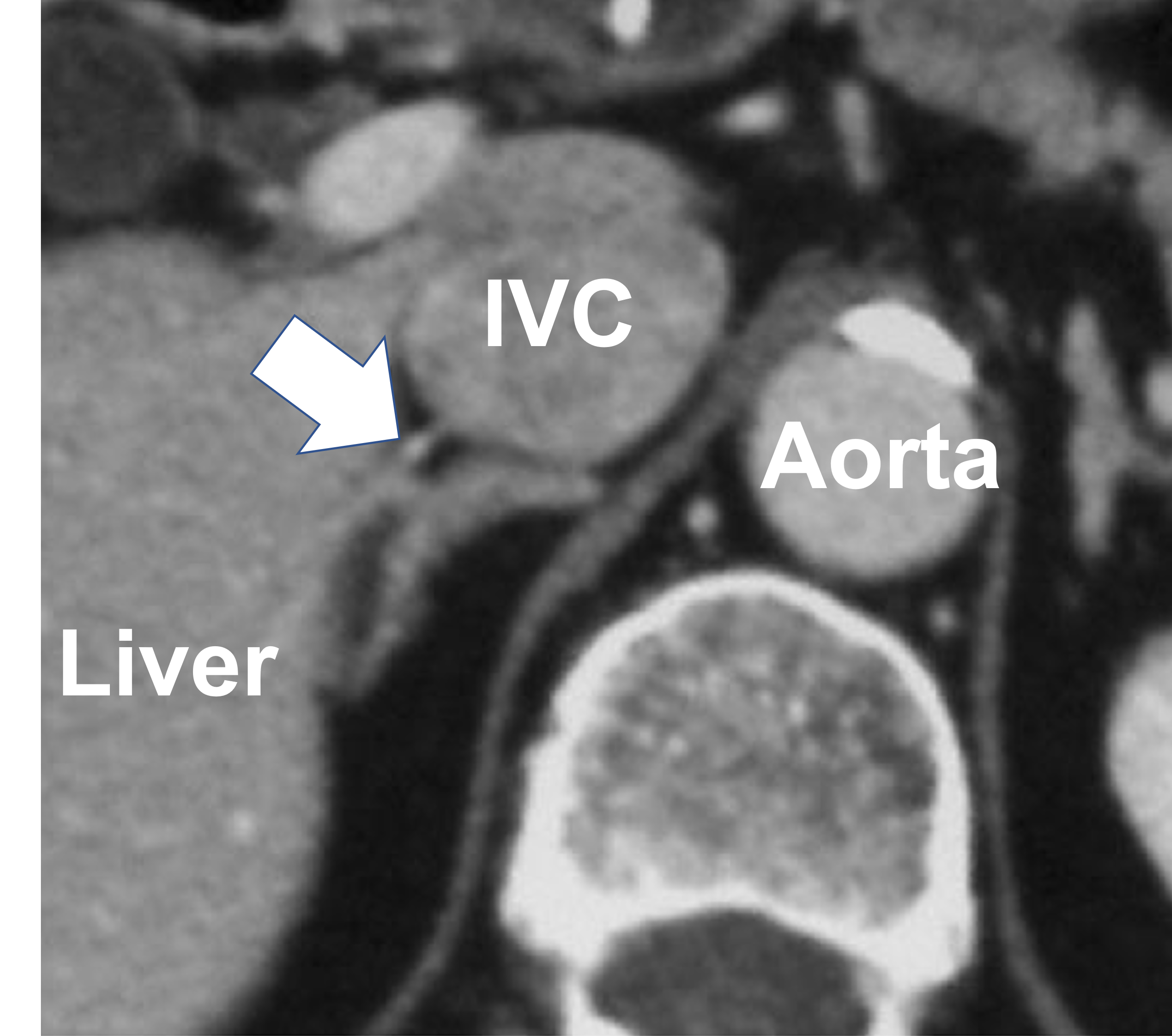 A special pre-procedure adrenal CT scan protocol used by Dr. Carling and his radiology colleagues clearly identifies the right adrenal vein (arrow) draining into the inferior vena cava (IVC)
It is very important to have a specific adrenal-protocol CT scan before adrenal vein sampling, since it improves the technical success rate. The reason is that the CT scan gives very detailed anatomical information about the tiny adrenal veins, specifically the right adrenal vein, which is short and variable and is the harder one to sample. The CT scan guides the interventional radiologist during the procedure and makes it easier to identify the tiny vessels accurately. At the Carling Adrenal Center we use a specific pre-procedure CT scan protocol for this purpose. If your center does not offer an adrenal-protocol CT scan in preparation for your adrenal vein sampling, ask about their success rate. Every patient should also have a 1-mg dexamethasone suppression test before AVS, because 13-27% of patients with PA also make too much cortisol, which can distort the AVS results. Your doctor will also tell you whether any medications need to be changed and whether your potassium needs to be corrected before the test.
Do not settle for lifelong blood pressure pills only because nobody can be found to perform adrenal vein sampling
Important. Every single week, we talk to patients who have been told that they will have to be treated with blood pressure pills for their primary aldosteronism for the rest of their lives, because their doctor does not know what to do next or how to find someone to perform adrenal vein sampling. The path of least resistance is often to treat the patient with ordinary blood pressure pills. For a patient who could be cured by surgery, this is a missed opportunity. Compared with people who have ordinary high blood pressure of the same severity, patients with PA have about 2.5 to 4 times the risk of stroke, 2.6 to 6.5 times the risk of heart attack and 3.2 to 12 times the risk of atrial fibrillation. Ordinary blood pressure pills do not fix the problem, which is the excess aldosterone. Medications that specifically block aldosterone (spironolactone or eplerenone) are a good treatment for mild or two-sided PA and for patients who are not candidates for surgery, but when one gland is responsible, surgery is the only cure. If you have moderate or severe PA and your CT scan shows no tumor at all, or is unclear, do not accept lifelong pills without further evaluation. In that situation, adrenal vein sampling is the test that tells us whether surgery can help.
Is AVS risky? The risks and limits of adrenal vein sampling
Adrenal vein sampling is not without risks. It is an invasive procedure. The risk of a major complication is 0.2-2.5%, and it is directly related to the experience of the interventional radiologist. The most important risks are bleeding causing a hematoma, adrenal infarction, adrenal vein thrombosis and perforation (or rupture) of the adrenal vein; these are more common on the right side, where the vein is shorter. Such injuries can scar the gland and make later surgery harder. AVS also has limits: it fails to sample both veins in a share of patients even in good hands, and the results need expert interpretation. At the Carling Adrenal Center, very small amounts of contrast dye are injected, to keep the procedure as safe as possible. Because the risks are low but not zero, it is important that adrenal vein sampling is performed only in patients who truly need it. This is where the expertise of the adrenal surgeon and the team is very important, to identify the patients who truly benefit from the procedure.
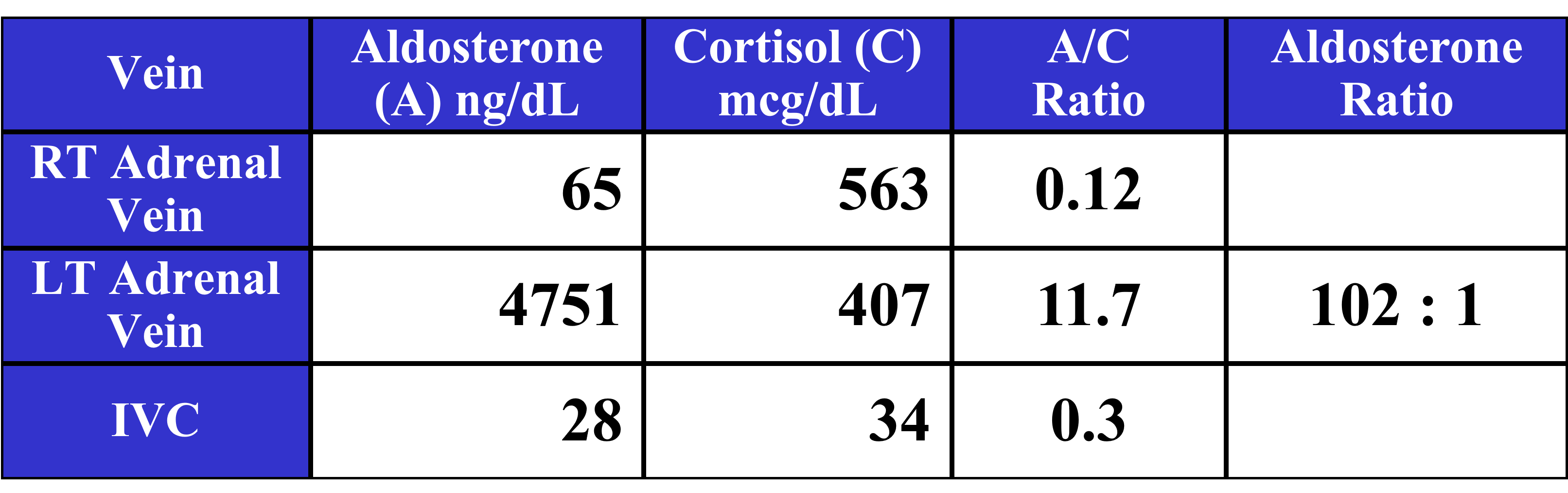 Typical results from a positive adrenal vein sampling demonstrate aldosterone over-production from the left adrenal gland. The adrenal vein sampling results need to be interpreted by an expert. The aldosterone levels are corrected for the cortisol concentration (A/C ratio). This patient had a Mini Back Scope Adrenalectomy (MBSA) and was completely cured of her primary aldosteronism (Conn’s syndrome). She came off all her blood pressure medications and all potassium pills.
Surgery can still help when AVS shows aldosterone coming from both adrenal glands
In the ideal scenario, adrenal vein sampling demonstrates significantly higher aldosterone production from one of the two adrenal glands. This makes adrenalectomy potentially curative. If there is over-production of aldosterone from both adrenal glands, the disease is often milder, and medication (spironolactone or eplerenone) works well for many patients. In selected patients with more severe disease, surgery may still be a favorable option. It can improve the blood pressure and potassium levels, relieve debilitating symptoms and improve the quality of life. Surgery can be particularly helpful in patients who are on several blood pressure medications or respond poorly to them. Sometimes adrenal-sparing surgery (partial adrenalectomy) on one or both sides may be the best option, done in stages at least 6 weeks apart. The goal is to remove the aldosterone-overproducing part of the adrenals but leave enough normal adrenal tissue that the patient does not need to take cortisol replacement (usually hydrocortisone). Trials comparing surgery with medication for two-sided PA are lacking, so this decision is made individually.
Read more about adrenal-sparing surgery (partial adrenalectomy).
What if I am allergic to contrast dye?
Some patients have an allergy to intravenous iodinated contrast dye. This is the same contrast dye used in CT scans. Severe reactions to iodinated contrast media are very rare. Sometimes patients can be pre-treated with steroids and antihistamines if they have had previous problems with contrast media. However, if you have had a serious reaction (swelling, erythema, low blood pressure, anaphylactic shock, racing heart rate, and wheezing) to contrast media, avoiding adrenal vein sampling may be the best option. In this case, it is preferable to let the CT scan (without contrast) guide the plan for adrenalectomy instead of adrenal vein sampling.What are the top 10 things to know about adrenal vein sampling for primary aldosteronism (Conn's syndrome)? Read more on our adrenal surgery blog , and see how PA is diagnosed on our diagnosis and testing page.
Last updated October 2026.