What Are Rare Adrenal Problems?
Certain adrenal tumors and diseases are common. In contrast, here is a list of rare adrenal problems:
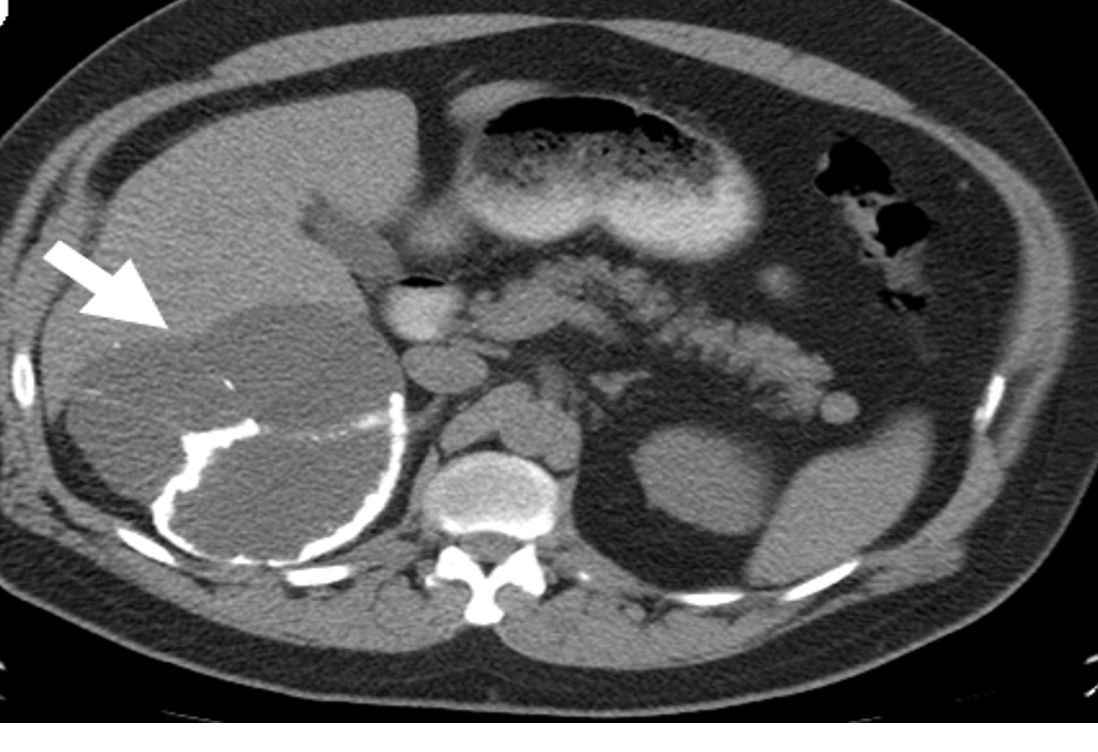 A huge cystic lymphangioma arising from the right adrenal gland. This is a rare tumor but has a characteristic appearance on a CT scan
- Uncommon tumors/masses of the adrenal gland
- Rare tumors of the retroperitoneum that may mimic an adrenal tumor
- Rare hereditary forms of primary aldosteronism (Conn's syndrome, primary hyperaldosteronism)
- Rare hereditary forms of adrenal hypercortisolism (adrenal Cushing syndrome)
- Hereditary pheochromocytoma and paraganglioma (not rare: about 30–40% of these tumors are hereditary)
- Rare hereditary forms of adrenocortical cancer
There are also a number of uncommon adrenal masses. The differential diagnosis may include myelolipoma (a benign tumor made of fat and bone-marrow cells, and the most common of these), amyloidosis, ganglioneuroma, granuloma, hamartoma, hematoma, hemangioma, leiomyoma, lipoma, neurofibroma, adrenal pseudocyst, lymphoma and teratoma.
 A huge cystic lymphangioma arising from the right adrenal gland. Dr. Carling removed it and it weighed close to 2.5 lbs.
Infections of the Adrenal Gland
Although rare in developed countries, various infectious diseases may cause an adrenal mass. These include tuberculosis, fungal infections (such as histoplasmosis and cryptococcosis) and echinococcosis (a parasitic infection). Adrenal cysts can be infectious, lymphangiomatous, angiomatous endothelial, cystic degenerative adenomas or embryonal retention cysts. Sometimes the imaging characteristics of these particular lesions on scans are helpful. Surgical resection may be needed due to mass effect where the mass pushes on nearby organs, or to prevent rupture, hemorrhage or infection. Additionally, when malignancy cannot be excluded based on imaging, surgical resection (adrenalectomy) is warranted.
Is it Ever Appropriate to Biopsy an Adrenal Mass?
Rarely. As explained on our page about common adrenal problems, the rule is that an adrenal mass should almost never be biopsied, and there are only a few exceptions to this rule. One exception for performing an adrenal fine needle aspiration biopsy is to distinguish adrenal tissue from metastatic tissue (cancer that spread from another organ to the adrenal gland) and, less commonly, to determine if an adrenal mass is due to an infection. The most common cancers that spread to the adrenal gland are those from the lung, kidney, breast, colorectal and malignant melanoma. Even then, a pheochromocytoma must first be ruled out with a blood or urine test for metanephrines, because a biopsy of a pheochromocytoma can be dangerous. Biopsies are still ordered more often than they should be, so ask whether the result would change your treatment. As a general rule, adrenal glands should not be biopsied.You can review examples of rare adrenal tumors, with scans and pathology, among our interesting cases. Some of these lesions require surgery, whereas others can safely be left alone. You certainly want an experienced surgeon and team who have seen these cases before to know whether you would benefit from treatment, and if so, what kind of treatment.
Tumors Next to the Adrenal Gland: Ganglioneuroma, Sarcoma and Lymphoma
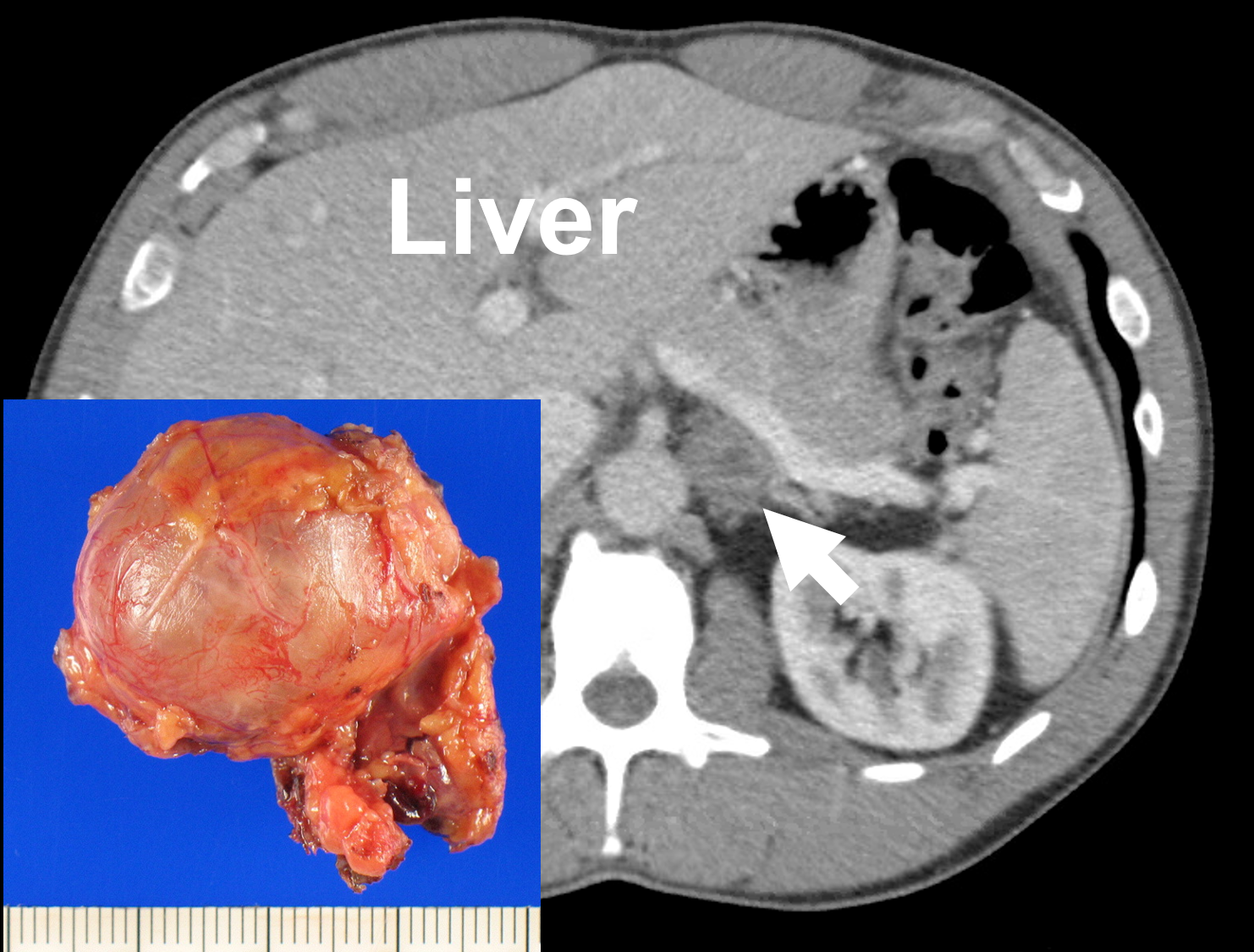 CT scan and gross pathology of a ganglioneuroma (4.3 cm; arrow). This is a rare retroperitoneal tumor, which arises adjacent to the adrenal gland. Like an adrenal tumor, it can be removed via a Mini Back Scope (MBSA) approach.
It is also very important to identify and distinguish adrenal tumors from the rare tumors that arise in the retroperitoneum (the space behind the abdomen) and next to the adrenal glands. These tumors on a scan (i.e. radiological imaging) can mimic an adrenal tumor. It is very important to distinguish these rare tumors from more common adrenal tumors since the treatment may be completely different. For instance, some of these tumors next to the adrenal gland do not require surgery, while others can be very aggressive and cancerous. These rare tumors of the retroperitoneum that do not arise from the adrenal gland include retroperitoneal sarcoma, lymphoma and other types of tumors. If you have a tumor in this area of the body, it is worth getting in your car, or on an airplane, to see an expert.
There are also genetic susceptibility syndromes that can cause adrenal disease, including rare hereditary forms of primary aldosteronism (Conn's syndrome), adrenal hypercortisolism (adrenal Cushing syndrome) and adrenocortical cancer. Hereditary pheochromocytoma and paraganglioma are not rare: about 30–40% of these tumors are hereditary, so genetic testing should be offered to every patient with a pheochromocytoma or paraganglioma. Please review each of these entities in their own sections of this website.
Last updated October 2026.