What Is Primary Aldosteronism?
Primary aldosteronism occurs when your adrenal glands produce excessive amounts of aldosterone, a hormone that helps control blood pressure and electrolyte levels. Too much aldosterone causes the body to retain sodium and lose potassium, which increases blood pressure. The excess can come from a single benign tumor, from several small nodules, or, rarely, from overgrowth of the whole gland. The condition is also called "Conn’s syndrome", after the doctor who first described it. Read our full overview of primary aldosteronism (Conn's syndrome).
Why Primary Aldosteronism Matters
This disease often flies under the radar. Many patients are treated with blood pressure medications without anyone ever identifying the real problem: a hormonal imbalance. PA affects an estimated 5-20% of all people with high blood pressure and is the leading cause of secondary hypertension, yet fewer than 1% of cases are diagnosed. Compared with ordinary high blood pressure of the same severity, PA carries about 2.5 to 4 times the risk of stroke, 2.6 to 6.5 times the risk of heart attack and 3.2 to 12 times the risk of atrial fibrillation. Read more about the complications of primary aldosteronism.
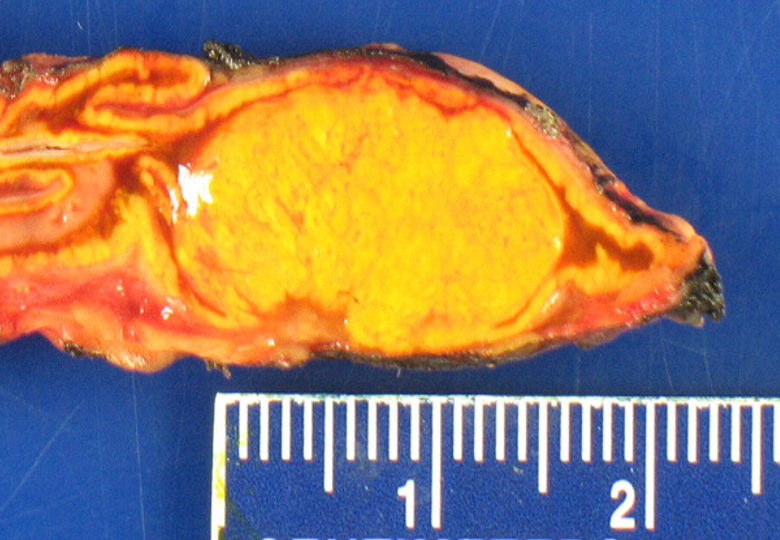 Adrenal tumor producing excess aldosterone, often curable with surgery.
Key Symptoms of Primary Aldosteronism
Many patients with PA have no symptoms that clearly point to adrenal disease; often the only sign is high blood pressure. Still, signs and symptoms of primary aldosteronism may include:
- High blood pressure, often resistant or difficult to control
- Low blood potassium levels (but most patients have normal potassium)
- Muscle cramps or weakness
- Headaches, anxiety, brain fog or heart palpitations
- Fatigue, poor sleep and frequent urination, especially at night
Importantly, many of these symptoms are non-specific, and the condition can be missed without proper testing.
Who Should Be Tested for High Aldosterone?
Everyone with high blood pressure should be screened once for PA with a blood test for aldosterone and renin; this is what the 2025 Endocrine Society guideline recommends. Low potassium is not required. Testing is especially important if you have high blood pressure and any of the following:
- Low potassium levels
- Hypertension that requires more than one medication
- Family history of primary aldosteronism or early-onset hypertension
- Hypertension with an adrenal mass discovered on imaging
How Primary Aldosteronism Is Diagnosed
Diagnosis involves checking the aldosterone-to-renin ratio (ARR), followed by an adrenal-protocol CT scan of the adrenal glands. Because 13-27% of patients with PA also make too much cortisol, every patient should also have a 1-mg dexamethasone suppression test. In selected patients, adrenal vein sampling (AVS) is needed to determine whether one or both glands are involved; many patients do not need it.
Treatment Options and Cure
If the excess aldosterone comes from one adrenal gland, surgery (usually a Mini Back Scope Adrenalectomy) cures the hormone problem in the large majority of patients (about 94% in a large international study). Blood pressure becomes completely normal without medication in roughly a third to a half of patients and improves in most of the rest. If the disease is mild or both glands are overactive, medication (spironolactone or eplerenone) works well for many patients, and staged adrenal-sparing surgery may help selected patients. After surgery, the removed tissue should be stained for aldosterone synthase (CYP11B2) and classified by the HISTALDO system, which helps predict whether the disease is cured. Potassium normalizes quickly after adrenalectomy, and blood pressure improves over weeks to months. Read more about surgery for primary aldosteronism.
Last updated October 2026.